




















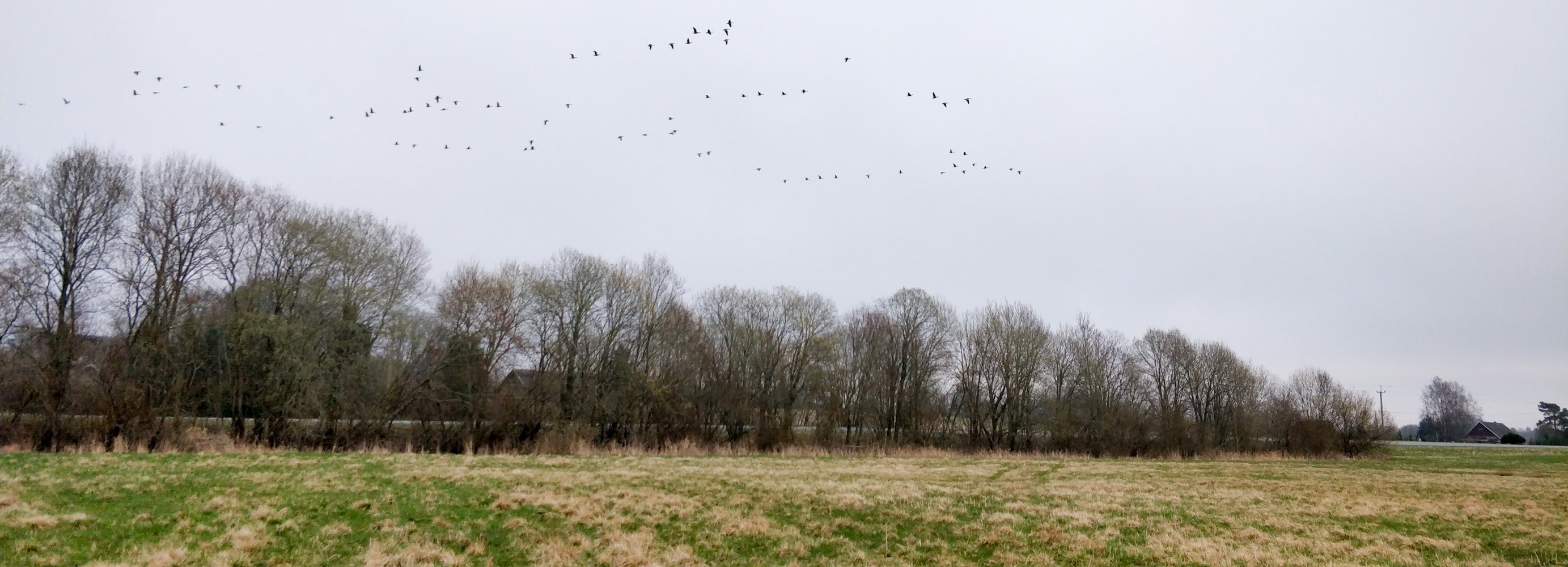
Twice a year, in spring and autumn, migratory flocks descend on European farmland in numbers that can level a crop in days. A single flock of starlings can strip a vineyard before harvest. Sown grain seed disappears overnight to skylarks and rooks. Newly planted maize is pulled up at the seedling stage by jackdaws. The economic damage runs into the tens of thousands of euros for individual farms – and most of it is preventable. Choosing the right agricultural bird scarer is one of the highest-ROI decisions any commercial grower will make. This guide explains what works on migratory flocks, what does not, and how to set up a system that protects crops year after year without ongoing labour.
The Real Cost of Migratory Bird Damage
Most farmers underestimate losses until they measure them. Studies on European cereal farms record routine damage of 5-15 % of marketable yield in unprotected fields, rising to 30 %+ during peak migration years on attractive crops (sunflower, maize at seedling stage, oilseed rape, ripening cherries and grapes). For a 50-hectare arable operation, even a 10 % loss is a five-figure annual hit. The investment in proper deterrent equipment typically pays for itself within one season – often within one crop cycle.
Why Migratory Birds Are So Hard to Deter
Migrating flocks behave differently from resident birds. They are highly motivated – they need to refuel during a long journey – and they arrive in groups large enough that habituation happens within hours rather than days. A static scarecrow that resident pigeons would tolerate for a week is identified as harmless by a 500-strong starling flock by the second feeding. Migratory bird control therefore requires equipment specifically designed for high-pressure scenarios: programmable bio-acoustic scarers, propane cannons, and lasers – used in combination, never alone.
1. Programmable Bio-acoustic Sound Scarers
The single most effective tool against migrating flocks is a programmable bio-acoustic scarer that plays randomised distress calls and predator screams at unpredictable intervals. Modern units like the Separador Smilingüido – Mamá, ¡tu me… and Tarjeta en 3D – ¡Felices 15 Años! are built for unattended seasonal use – programme once at the start of the migration window, leave them running, and they protect 3-4 hectares each. The randomisation is what matters: a single looping recording fails within 48 hours, but a unit that varies the call, the interval and the speaker direction prevents the flock from ever settling into a routine. For most arable operations, one device per 3 hectares covers the crop through the entire migration window.
2. Propane Gas Cannons
For large open fields and the highest-pressure migration sites, a PROMESAS PARA 7 DIAS mounted on a Tarjetas oraciones de poder -Para hombres victoriosos produces periodic detonations no flock will tolerate. The randomised firing direction prevents birds from learning a “safe side” of the field. Combined with an audio scarer, gas cannons handle the very largest migrating flocks – including geese, cormorants and wood pigeons that ignore quieter deterrents. Cannons are not suitable for fields close to residential properties due to noise levels, but on remote farmland they are the heavy artillery that finishes the job when audio alone is not enough.
3. Automated Bird-Scaring Lasers
Modern Tarjetas Oraciones De Poder Para Hombres Victoriosos are perceived by birds as a physical threat – they leave the area immediately. Lasers are uniquely effective at dawn and dusk when migrating flocks are arriving at and leaving the roost, and inside warehouses, hangars and storage barns where audio devices are difficult to install. Programmable timers project the beam only during the active hours, conserving the device life and avoiding unnecessary disturbance. For sensitive sites near residential areas where noise restrictions apply, lasers are the silent agricultural alternative to a propane cannon.
4. Eagle Kites and Visual Predator Scarers
A Separador Smilingüido – Mujer Ejemplar… on a telescopic pole soars over the field, casting a hawk-shaped shadow that triggers the same instinctive flight response in migrating flocks as in resident birds. Kites work especially well in combination with audio scarers – the audio displaces birds initially, the kite prevents them from settling back. Move the pole every two to three days so the flock cannot adjust to its position. For larger operations, a Tarjetas Oraciones Diarias Para Niños Y Niñas. that randomly inflates and deflates adds an unpredictable visual element that flocks find genuinely unsettling.
5. Telescopic Mounting and Coverage Strategy
Effective coverage matters as much as the device itself. A Palabritas Edición Belleza Deslumbrante para Mujeres raises kites and decoys above the crop, increasing the visible area. For audio scarers, mount the unit so the speakers project across (not into) the prevailing wind – this dramatically increases effective range. Position devices at the edge of the field where flocks first arrive, not in the centre, so birds encounter the deterrent before they have committed to feeding. On L-shaped or curved fields, two smaller units placed at the corners often outperform one larger unit in the middle.
The Layered Approach for Migration Pressure
The professionals never rely on a single device for migrating flocks. A typical successful arable setup combines:
- One bio-acoustic sound scarer per 3 hectares, randomised, programmed for active hours.
- One propane cannon per 5-10 hectares on a rotating tripod, for the largest flocks.
- One eagle kite or scare-man per visible field section, repositioned every two to three days.
- Reflective tape along the most exposed edges as a low-cost supporting layer.
- For sensitive boundaries: a programmable laser instead of a cannon, to comply with noise regulations.
This combination, deployed before migration begins and run through the full window, eliminates the bulk of flock damage on most commercial arable crops.
Timing: Install Before Migration Arrives
The single biggest mistake farmers make is installing deterrents only after they see damage. By the time the first hundred starlings appear in the field, scouts have already mapped the crop and the flock is on its way. Install the sound scarers, cannons and kites at least one week before the migration window opens for your latitude. Flocks that arrive to find the field already hostile relocate to unprotected farms. Flocks that arrive to find a quiet field and then meet deterrents only after they have started feeding will simply tolerate the noise because they have already committed.
Match the Setup to Your Crop
- Cereal grain (wheat, barley, oats): sound scarers + kites at the seedling and ripening stages – high-pressure species are pigeons, rooks and pheasants.
- Maize: heavy protection at seedling stage (jackdaws, crows pulling up shoots) and again at cob ripening (badgers and corvids).
- Sunflower: sound scarer + propane cannon – sunflower heads attract the most aggressive flocks of starlings, sparrows and finches.
- Vineyards: sound scarer + reflective tape + netting on the most exposed rows – see also our broader Outoor & Leisure range for the main vineyard pest.
- Orchards (cherry, plum, apple): netting on individual trees + sound scarer + eagle kite during ripening.
- Fish farms and ponds: see Workwear – different species, different deterrents.
Legal and Humane Notes
Across the EU and UK, migratory species are protected under wildlife legislation. Lethal control is heavily restricted and requires specific licences. The methods on this page are all humane, non-lethal and legal – they make the field uncomfortable, prompting the flock to relocate without harm. They are also more effective long term: kill a few birds and others move into the territory; make the field unattractive and the entire flock leaves.
Get the Right Setup Before Next Migration
Whether you are protecting 5 hectares of cherries or 200 hectares of grain, the right combination of agricultural bird scarers, propane cannons, lasers and kites delivers measurable yield protection in a single season. Browse the full Slice – every device has been tested on real European farms across cereal, fruit, vineyard and oil-crop operations.
Frequently Asked Questions
What is the best agricultural bird scarer?
For most arable operations, a programmable bio-acoustic sound scarer (such as the AgriPro 3 Ha or 4 Ha models) is the single most effective tool – one device covers 3-4 hectares and delivers measurable yield protection across the full migration window. For the highest-pressure crops (sunflower, sea buckthorn, large vineyards), combine the audio scarer with a propane gas cannon on a rotating tripod. The professionals never rely on one device – the layered combination is what delivers permanent results.
How do I scare birds away from my farm fields?
Layer multiple deterrents and install them before migration arrives. A typical successful setup uses one bio-acoustic sound scarer per 3 hectares, a propane cannon per 5-10 hectares for the largest flocks, an eagle kite or scare-man inflatable per visible field section (relocated every two to three days), and reflective mylar tape along the most exposed edges. Deploy at least one week before the earliest crop ripening or first migration arrival. Birds that meet a hostile field on day one relocate to unprotected farms.
Are propane bird cannons legal?
Yes, propane bird cannons are legal across the EU and UK for agricultural use, but local rules govern their operation – typically restricting use to daylight hours, limiting firing frequency, and requiring minimum distances from residential properties (commonly 200-300 metres). Always check your specific local regulations before installing. For fields close to homes where cannons would breach noise rules, a programmable laser or audio scarer is the legal alternative that achieves comparable results.
Do bird-scaring lasers work on migrating flocks?
Yes, especially at dawn and dusk when migrating flocks are arriving at or leaving the roost. Modern automated lasers project a moving green beam that birds perceive as a physical threat – they leave the area immediately. Lasers are uniquely useful inside warehouses, hangars and storage barns where audio devices are difficult to install, and for fields near residential areas where noise regulations restrict cannon use. Programmable timers ensure the beam is active only during the relevant hours.
How much yield can I save with proper bird control?
Studies on European cereal farms record routine bird damage of 5-15 % of marketable yield in unprotected fields, rising to 30 %+ during peak migration years on attractive crops (sunflower, maize at seedling stage, oilseed rape, ripening cherries and grapes). Proper agricultural bird control eliminates the bulk of this damage and typically pays for itself within one season. For a 50-hectare arable operation, the difference between unprotected and properly protected fields is regularly five figures per year.
Are migratory birds protected? Can I shoot them?
Migratory species are protected under wildlife legislation across the EU and UK. Lethal control is heavily restricted and requires specific licences that are difficult to obtain – and ornithologists generally consider hunting during migration ineffective and ethically problematic. The methods on this page are all humane, non-lethal and legal – they make the field uncomfortable so the flock relocates without harm. They are also more effective long-term: kill a few birds and others move into the territory; make the field unattractive and the entire flock leaves.